 RecursiveOct 22, 2026 15:23 UTC
Recursive Unveils Flint, an LLM Developed Through AI-Driven Autonomous Research
AI startup Recursive has announced Flint, its first large language model. Flint is a locally-executed model specialized for coding tasks, developed in just 4 months by a team of former Google DeepMind researchers using an in-house system called Eureka Machine. Eureka Machine is a mechanism where AI autonomously explores and optimizes model architectures, though whether this approach will actually lead to self-improving AI remains unproven.
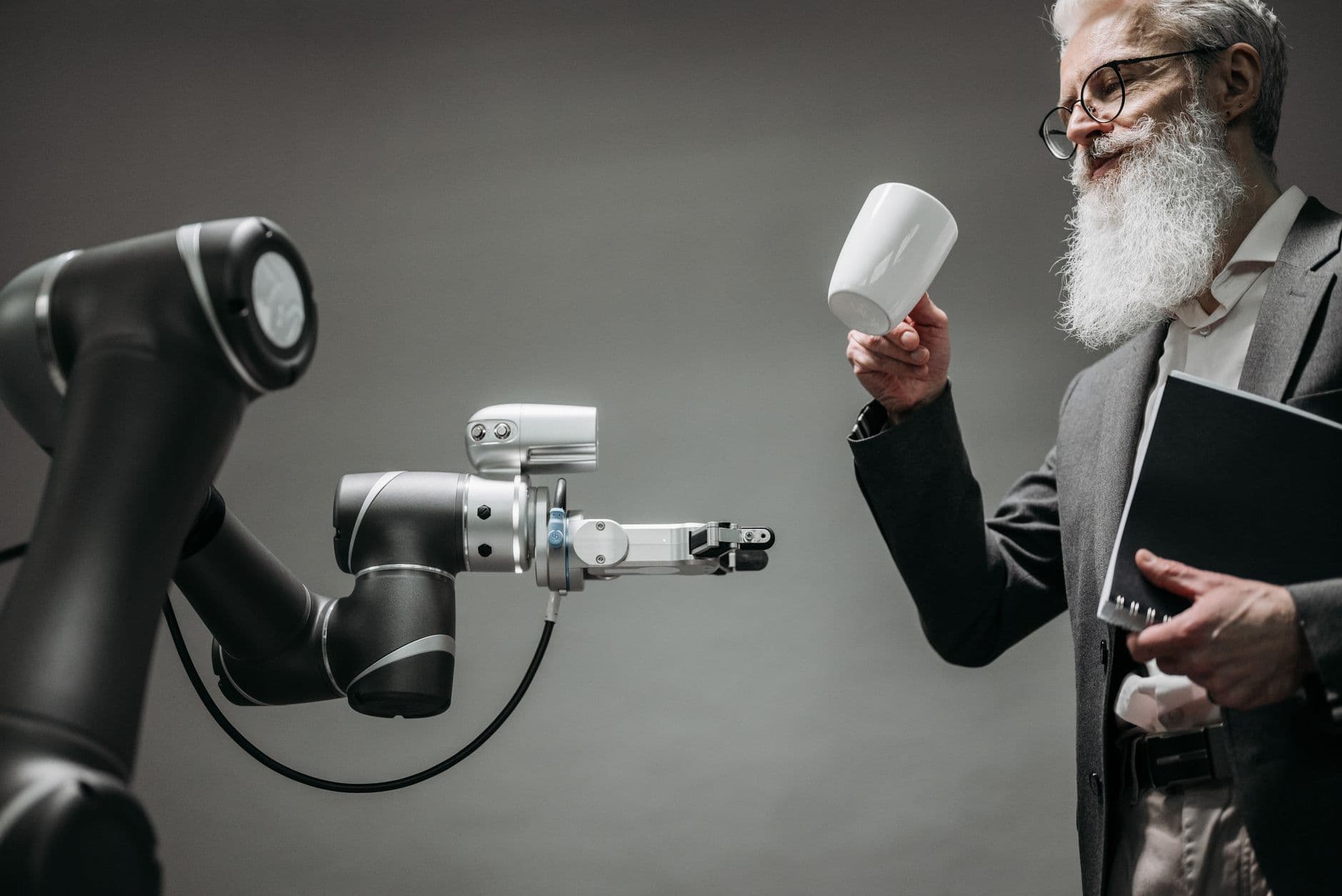
AI startup Recursive has announced Flint, its first large language model. Flint is a locally-executed model specialized for coding use cases, adopting an architecture called "MoE (Mixture of Experts—a structure combining multiple specialized models)," with parameter counts reaching 40 billion. The development team is led by former Google DeepMind researchers.
The noteworthy aspect lies in how this model was created. Rather than being led by human researchers, Flint was developed using "Eureka Machine," an in-house system that Recursive created to automate AI research. Eureka Machine autonomously explores, evaluates, and optimizes model architectures (the backbone of design), automatically repeating the research process. In other words, it adopts a structure where "AI researches and improves AI."
The development period was merely 4 months. In a context where large language model development typically requires years and substantial human resources, this is remarkably short. It appears plausible that automation via Eureka Machine significantly accelerated the development pace, yet detailed information about its mechanisms and efficiency has not been disclosed at this point.
Within AI research circles, interest in such "autonomous research automation (AI-driven research)" has grown over recent years. Traditional AI development involves researchers designing experiments and engaging in iterative trial-and-error—a labor-intensive process with inherent scalability limits. An approach where AI assumes the design process itself, as with Eureka Machine, is positioned as a potential breakthrough in research efficiency and acceleration.
Conversely, whether Recursive's approach actually leads to "self-improving AI" remains unproven. Flint is merely the first tangible outcome of this effort at this stage, and no independent external verification has been conducted to demonstrate whether Eureka Machine truly functions as an autonomous research cycle. There remains room for careful assessment between the startup's claims and their widespread recognition.
The fact that Flint is both coding-specialized and locally-executed also signals a particular strategic direction. A design that operates on devices at hand without sending data to the cloud could become an option for developers and enterprises prioritizing privacy and security. Additionally, narrowing the scope of application can be read as a strategy to gain cost and efficiency advantages over general-purpose large-scale models.
The critical question going forward is whether Eureka Machine can continuously improve models. Flint is merely the first step, and how far Recursive can extend and validate this approach becomes a crucial inflection point in determining the company's direction. For the concept of AI research automation to take root as a practical reality, accumulated results demonstrating reproducibility and transparency are essential.
This article is an original work independently written and edited by the AI issue editorial team based on factual reporting. © AI issue. Unauthorized reproduction, redistribution, or use for AI training is prohibited.