 AnthropicOct 25, 2026 17:24 UTC
Anthropic Co-founder Predicts Self-Improving AI by 2027
A new benchmark developed by P-Zero Research, which measures AI's ability to autonomously design and evaluate experiments, is showing rapid performance improvements. Following these results, Anthropic co-founder Jack Clark has advanced his prediction for when 'self-improving AI'—where AI improves its own capabilities—could be realized, suggesting it may arrive by 2027.
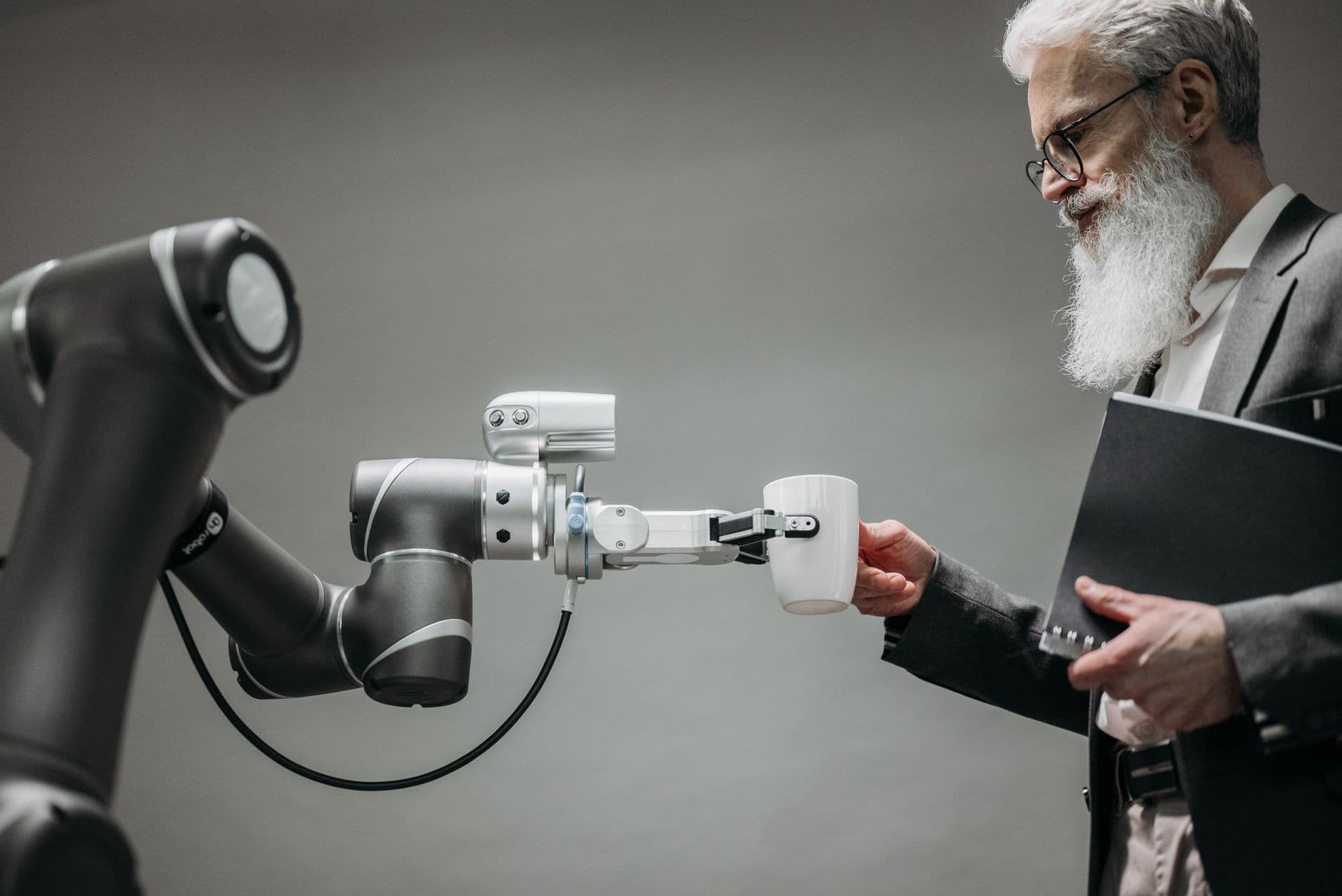
Jack Clark, co-founder of Anthropic, has advanced his prediction for when 'self-improving AI'—where AI repeatedly improves itself—could be realized, suggesting it may arrive by 2027. This update to his prediction was prompted by the emergence of a new benchmark that measures AI models' ability to autonomously design and evaluate experiments.
The benchmark was developed by 'P-Zero Research,' a research institution that quantitatively measures how autonomously AI can design scientific experiments and evaluate their results. Conventionally, such tasks have been considered the domain of human researchers. The attempt to systematically measure AI's capability to perform these tasks itself represents a new stage in AI research.
Clark's direct reason for advancing his prediction is that the rate of performance improvement measured by this benchmark is progressing faster than anticipated. The fact that AI can autonomously design and evaluate experiments means, in other words, that AI is approaching a stage where it can participate in its own research and development process.
'Self-improving AI' refers to a mechanism where AI modifies and improves its own architecture or learning process and enhances its capabilities without human intervention. This is one of the long-standing theoretical endpoints in AI research, and if realized, the pace and direction of technological progress could differ significantly from before.
Clark is a figure who, as a co-founder of Anthropic, has been deeply involved in AI safety research. The fact that someone in such a position has discussed the realization of self-improving AI in specific terms is noteworthy within the industry. Importantly, this is not so much an optimistic prediction as a view presented based on the trajectory of objective benchmark data.
Assessments of AI development speed often diverge within the industry. However, the fact that benchmark scores measuring the concrete capability of autonomous experiment design are rising rapidly, as in this case, has the potential to serve as a standard by placing the discussion on empirically observable data. Going forward, continuously tracking the trajectory of P-Zero Research's benchmark scores and the responses of various AI research institutions to them will provide clues for understanding where self-improving AI currently stands.
This article is an original work independently written and edited by the AI issue editorial team based on factual reporting. © AI issue. Unauthorized reproduction, redistribution, or use for AI training is prohibited.